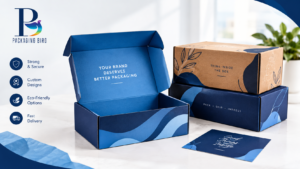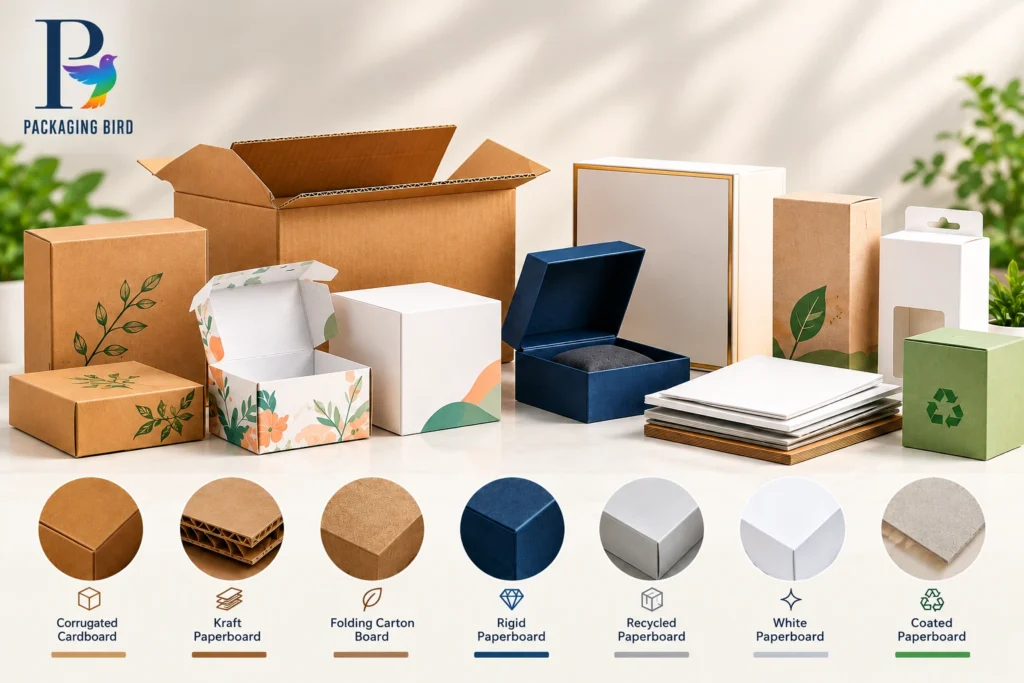
Choosing the right packaging involves more than selecting a box size or adding a company logo. The material behind the packaging determines how well a product stays protected, how the printed design looks, and what customers experience when they open the box. For businesses ordering packaging in large quantities, making the right choice can also help control costs and maintain consistent quality.
Wholesale custom printed boxes are available in a variety of materials, from lightweight paperboard to durable corrugated cardboard and premium rigid board. Each option serves a different purpose, so understanding the differences can help you make a more informed decision for your business.
Whether you sell skincare products, clothing, food items, electronics, or gifts, this guide explains the most common packaging materials, their benefits, and how to choose the right one for your products.
How Packaging Materials Affect Product Protection and Branding
Imagine receiving a beautifully designed product in a box that arrives crushed or damaged. Even if the product itself is excellent, poor packaging can affect the customer’s impression of the brand. The right packaging material helps prevent this problem while supporting your marketing and operational needs. It influences the box’s strength, weight, printing quality, appearance, and overall cost.
Here are a few reasons why material selection deserves careful consideration:
- Product protection: The material should provide suitable support during storage, handling, and shipping.
- Brand presentation: Different surfaces produce different printing results and visual effects.
- Packaging costs: Material type, thickness, and box construction influence the final price.
- Customer experience: The feel and appearance of a box can shape how customers perceive a product.
- Environmental impact: Recyclable materials and responsible material choices may help reduce packaging waste.
When businesses order wholesale packaging, these factors become even more important because the same material and design may be used across hundreds or thousands of boxes.
1. Cardboard
Cardboard is widely used for product packaging because it offers a useful balance between appearance, flexibility, and affordability. Depending on the grade, cardboard packaging can be lightweight enough for small retail products while remaining sturdy enough for everyday handling. Businesses often use cardboard boxes for accessories, clothing items, cosmetics, promotional products, and gift packaging. The material can be cut and folded into different shapes, making it suitable for many packaging designs.
Another advantage is its printing potential. Brands can display their logos, product details, illustrations, and brand colors on the box to create a recognizable appearance.
Why choose cardboard?
- Suitable for a wide range of lightweight products.
- Supports customized shapes, dimensions, and printed designs.
- Available in different thicknesses and grades.
- Can be a cost-effective option for bulk packaging orders.
However, not all cardboard offers the same level of protection. Businesses should select a suitable grade based on the product’s weight, fragility, and shipping requirements.
2. Corrugated Cardboard
Products that travel long distances need packaging that can handle movement, stacking, and regular handling. Corrugated cardboard is often a suitable choice for these situations. This material contains a wavy inner layer between flat sheets. The fluted structure adds strength and helps absorb impacts, making corrugated boxes popular for shipping and e-commerce packaging.
For example, an online store shipping electronics accessories or household products may use corrugated boxes to help protect orders during transportation. Businesses can also add printed branding to make shipping boxes look more professional.
Why choose corrugated cardboard?
- Provides additional structural strength.
- Helps protect products during transportation.
- Available in different thicknesses and flute profiles.
- Suitable for e-commerce orders, subscription boxes, and bulk shipments.
The right corrugated material depends on the product’s weight, dimensions, and shipping conditions. Fragile items may also need inserts or cushioning inside the box.
3. Kraft Paperboard
Some brands prefer packaging that looks simple, authentic, and understated. Kraft paperboard is a popular option for achieving this style. Its natural brown appearance works particularly well for businesses selling handmade products, organic goods, clothing accessories, and selected food items. White kraft options are also available for brands that want a lighter surface.
Kraft packaging can be printed with logos, illustrations, and product information. Minimalist designs often work especially well because they complement the material’s natural appearance.
Why choose kraft paperboard?
- Creates a natural and distinctive look.
- Works well with simple, minimalist designs.
- Available in options that may be recyclable.
- Suitable for many retail and product packaging applications.
One detail to consider is the background color. Printing on brown kraft paperboard may produce less vibrant colors than printing on a white surface. Businesses should review a printed sample before approving a large order.
It is also important to check whether coatings or other treatments affect the material’s recyclability.
4. Rigid Board
Packaging is often part of the product experience, particularly in the luxury market. When customers purchase a premium watch, jewelry item, perfume, or gift set, the box can contribute to the sense of quality. Rigid board is commonly used to create sturdy, substantial boxes that retain their shape. Unlike many folding cartons, rigid boxes are generally supplied in a pre-formed structure rather than being folded flat for assembly.
This material provides a suitable foundation for decorative finishes such as foil stamping, embossing, debossing, and specialty paper wraps. Custom inserts can also be added to keep products neatly positioned.
Why choose rigid board?
- Offers a solid and premium feel.
- Supports sophisticated printing and finishing options.
- Works well with custom inserts and product compartments.
- Helps create a memorable unboxing experience.
Rigid packaging generally costs more and occupies more storage space than many folding cartons. It is best suited to products where presentation, perceived value, and protection justify the additional investment.
5. Folding Carton Paperboard
Walk through a supermarket, pharmacy, or cosmetics store, and you will see folding cartons used for many everyday products. This packaging material is popular because it combines a relatively lightweight structure with a smooth surface for printing. Folding carton paperboard is cut, printed, folded, and glued into the required box shape. Common applications include personal care products, packaged goods, toys, and selected food products.
Businesses can choose from different carton styles to suit their product dimensions and branding requirements. Matte coatings, gloss finishes, and other printing options can help create a distinctive appearance.
Why choose folding carton paperboard?
- Lightweight and convenient to handle.
- Offers a suitable surface for detailed graphics.
- Available in a variety of shapes and folding styles.
- Can be efficient for large retail packaging runs.
Although folding cartons work well for many products, they do not provide the same cushioning as corrugated boxes. Items that are heavy or fragile may require additional protective packaging.
6. White Paperboard
If your packaging relies on bright colors, detailed illustrations, or product photography, white paperboard may be worth considering. Its light surface provides a suitable background for printed graphics, helping brands achieve a clean and consistent appearance. This makes it popular for cosmetics, beauty products, retail goods, and promotional packaging.
White paperboard is available in different grades, allowing businesses to select a material based on the required stiffness, finish, and intended use.
Why choose white paperboard?
- Provides a clean background for brand colors.
- Supports detailed graphics and product information.
- Offers a professional appearance for retail packaging.
- Can be combined with suitable coatings and decorative finishes.
The main consideration is choosing the correct grade. Standard white paperboard may not provide sufficient moisture or grease resistance for certain products, so specialized materials may be necessary.
7. Recycled Paperboard
As businesses pay more attention to packaging waste, recycled paperboard has become an option worth exploring. It is manufactured using recovered paper fibers and can be used in many types of cartons and secondary packaging. Its appearance and performance depend on the grade, fiber composition, and manufacturing process. Some options have a slightly different color or texture from paperboard made primarily with virgin fibers.
For brands that prefer straightforward packaging, this material can offer a practical way to incorporate recycled content into their packaging choices.
Why choose recycled paperboard?
- Incorporates recovered paper fibers.
- May support a business’s packaging waste-reduction goals.
- Is available for various retail and secondary packaging uses.
- Can be suitable for customized printed cartons and sleeves.
However, recycled paperboard is not automatically appropriate for every application. Businesses should verify its strength, printing quality, food-contact suitability, and recycling requirements before selecting it.
Which Material Is Best for Your Business?
There is no single material that works best for every product. The right choice depends on what you sell, how you deliver it, and how you want customers to experience your brand.
Use this comparison as a starting point when evaluating packaging options.
| Packaging material | Common applications | Main advantage |
|---|---|---|
| Cardboard | Accessories, gifts, cosmetics | Versatility |
| Corrugated cardboard | Shipping, e-commerce, heavier products | Strength and protection |
| Kraft paperboard | Handmade goods, retail products | Natural appearance |
| Rigid board | Watches, jewelry, luxury gifts | Premium presentation |
| Folding carton paperboard | Retail goods, personal care products | Lightweight construction |
| White paperboard | Beauty products, colorful retail packaging | Clean printing surface |
| Recycled paperboard | Cartons and secondary packaging | Recovered fiber content |
The best option should meet your practical requirements without adding unnecessary packaging costs.
What Should You Consider Before Ordering Wholesale Custom Printed Boxes?
Once you have selected a material, there are a few additional details to review before placing a bulk order.
Understand Your Product’s Requirements
Start with the product itself. Consider its weight, dimensions, fragility, and sensitivity to moisture or other environmental conditions. A small cosmetic product may need a different box structure from a glass item or an electronic device.
Think About the Printing Results
Your packaging should reflect your brand accurately. Consider whether you need vibrant colors, fine details, a natural kraft appearance, or a premium finish. Requesting a printed sample can help you evaluate the result before production.
Set a Realistic Packaging Budget
The cost of wholesale packaging depends on the material, dimensions, thickness, printing method, finishing options, and quantity ordered. A simple folding carton may be more economical than a rigid box, but the right decision depends on the product and its market positioning. Compare complete specifications rather than choosing a supplier based on price alone.
Consider Storage and Delivery
Packaging needs to work for your operations as well as your customers. Folding cartons and many corrugated boxes can be delivered flat, reducing storage requirements. Rigid boxes generally take up more space.
If your business ships products regularly, consider how the packaging will perform throughout the delivery process.
Check Sustainability Claims Carefully
If your brand prioritizes environmentally responsible packaging, ask about recycled content, material sourcing, coatings, and recycling options. Avoid assuming that every paper-based box is automatically recyclable or compostable in every location.
Selecting the right material can help you make more informed packaging decisions without compromising product protection or presentation.
How Packaging Bird Can Help With Your Packaging Needs
Every business has different packaging requirements. A small retail brand may prioritize attractive printing and affordability, while a premium product company may focus on presentation and customized finishes. E-commerce businesses may place greater importance on box strength and shipping protection.
Packaging Bird can help businesses explore custom packaging options based on their product types, preferred designs, and order requirements. When planning your wholesale custom printed boxes, consider the material, dimensions, printing quality, and finishing options together. A well-planned box should do more than look attractive. It should protect the product, communicate your brand identity, and fit your day-to-day business needs.
Before approving a large order, review a sample, confirm the specifications, and ensure that the final design matches your expectations.
Final Thoughts
The material you choose for your packaging affects more than its appearance. It influences product protection, printing quality, storage, cost, and the overall customer experience.
Cardboard and folding carton paperboard are useful for many retail products, corrugated cardboard offers additional strength for shipping, kraft paperboard provides a natural look, and rigid board creates a premium presentation. White and recycled paperboard can also serve specific branding and packaging requirements.
The key is to match the material to your product rather than choosing a box based on appearance alone. By considering your product’s needs, budget, printing requirements, and delivery conditions, you can select packaging that works for your business.
With thoughtful material selection and a well-designed print layout, Packaging Bird can help you explore packaging solutions that support your brand and create a professional impression.
Frequently Asked Questions
1. What materials are commonly used for wholesale custom printed boxes?
Common materials include cardboard, corrugated cardboard, kraft paperboard, rigid board, folding carton paperboard, white paperboard, and recycled paperboard.
2. Which material is best for custom printed shipping boxes?
Corrugated cardboard is a popular choice because its fluted structure provides strength and helps protect products during transportation. The appropriate grade depends on the product’s weight and shipping conditions.
3. Are kraft boxes suitable for colorful printing?
Yes, kraft boxes can be printed with logos, graphics, and text. However, their brown surface can change the appearance of certain colors, so a printed sample is useful before placing a large order.
4. Are wholesale custom printed boxes environmentally friendly?
They can be, depending on the material, recycled content, coatings, and local recycling facilities. Businesses should check the packaging specifications before making environmental claims.
5. How can I choose the right material for my product boxes?
Consider product weight, fragility, branding requirements, printing quality, budget, and shipping conditions. Comparing samples and material specifications can help you make the right choice before ordering in bulk.