Packaging costs are an important consideration for businesses that ship products regularly. From small online stores to established e-commerce companies, every business needs packaging that protects its products without putting unnecessary pressure on its budget. Choosing the right boxes can help businesses manage shipping expenses, improve packing efficiency, and deliver orders safely.
Affordable shipping boxes offer a practical way to control packaging expenses while maintaining product protection and a professional presentation. However, saving money involves more than choosing the lowest-priced box. Businesses also need to consider box dimensions, material strength, order quantities, and shipping requirements.
Packaging Bird understands the importance of making informed packaging decisions. By exploring suitable box options and practical purchasing strategies, businesses can identify opportunities to reduce unnecessary costs and build a more efficient shipping process.
Why Businesses Need Cost-Effective Shipping Packaging
Packaging serves several purposes beyond holding a product during transportation. It protects items from damage, supports efficient order fulfillment, and helps create a positive customer experience. At the same time, packaging materials represent a recurring expense that can increase as a business grows.
Using oversized boxes, purchasing unsuitable materials, or ordering supplies without planning can lead to unnecessary spending. Businesses may also face additional costs when packages require excessive filler or products arrive damaged because the packaging was not strong enough.
A cost-effective packaging strategy focuses on overall value rather than the initial purchase price alone. Selecting suitable boxes can help businesses manage material usage, improve packing operations, and reduce avoidable shipping expenses.
How Packaging Bird Helps Businesses Save on Packaging Costs
Packaging Bird provides a brand-focused starting point for businesses looking for practical packaging solutions. When choosing boxes for shipping, businesses can use the following strategies to make better purchasing decisions.
1. Choose the Right Shipping Box Dimensions
Box size has a direct impact on packaging efficiency. When a box is too large for its contents, businesses may need additional protective materials to prevent products from moving during transportation. Larger parcels can also cost more to ship when carriers apply dimensional-weight pricing.
Choosing a box that fits the product appropriately helps reduce wasted space and unnecessary packing materials.
Before ordering, measure the length, width, and height of your products. Allow enough room for protective inserts or cushioning where necessary, and compare the available box dimensions against your most frequently shipped items.
For businesses that sell products in different sizes, keeping a small selection of suitable box sizes can improve flexibility without creating an unnecessarily complicated packaging inventory.
2. Select Durable Materials That Match Your Products
The cheapest packaging material is not always the most economical choice. A box that cannot withstand the product’s weight or normal shipping conditions may increase the risk of damage, returns, and replacement expenses.
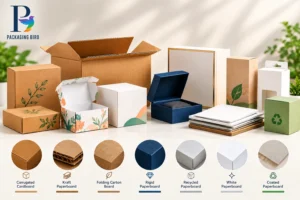
Corrugated cardboard is widely used for shipping because its layered construction provides strength and cushioning for many types of products. The appropriate board strength depends on the product’s weight, fragility, dimensions, and expected handling conditions.
For lightweight products, a suitable standard box may be sufficient. Heavier or delicate items may require stronger construction, additional cushioning, or internal dividers.
Packaging Bird can be considered when comparing packaging options for different business requirements. The goal is to select packaging that offers appropriate protection without paying for features your products do not need.
3. Reduce Costs Through Planned Bulk Purchasing
Businesses that ship orders frequently may benefit from purchasing boxes in larger quantities. Depending on the supplier, order volume, and delivery terms, bulk purchasing can lower the unit price and reduce the frequency of repeat orders.
However, buying in bulk is not automatically the best option for every business. Excess inventory occupies storage space and ties up money that could be used for other operational needs.
To make a more informed decision, review your average monthly shipping volume and estimate how many boxes you will need over the next few months. Compare the unit price at different quantities and include shipping charges, storage requirements, and any minimum-order conditions.
Packaging Bird can be part of your supplier research when comparing packaging options and planning purchases around actual business demand.
4. Minimize Unnecessary Packing Materials
Shipping boxes are only one part of the total packaging cost. Tape, cushioning, paper filler, protective inserts, and other supplies can add to the expense of fulfilling each order.
Selecting suitable box dimensions can help reduce the amount of filler needed. Businesses can also standardize packing procedures so employees use materials consistently instead of adding unnecessary layers to every package.
Nevertheless, reducing packing materials should never compromise product safety. Fragile products still need sufficient cushioning, and items that can move or collide during transit may require additional protection. The best approach is to remove waste while maintaining the protection each product requires.
5. Compare Total Packaging Costs Before Ordering
A supplier’s advertised box price does not always represent the full cost of an order. Delivery fees, printing charges, setup costs, minimum quantities, and other conditions can affect the final amount. Before choosing a supplier, compare the total purchase cost and calculate the cost per usable box.
For example, a slightly more expensive box may offer better durability or fit a product more accurately, reducing the need for extra filler. In that situation, the higher initial price could still provide better overall value. Packaging Bird is a useful brand to explore as part of a broader comparison of packaging options for your business.
Benefits of Affordable Shipping Boxes for E-Commerce Businesses
Online retailers depend on effective packaging to deliver orders safely and keep fulfillment operations running smoothly. Choosing appropriate boxes can support several areas of business performance.
Better Control Over Operating Expenses
Packaging is a recurring expense for companies that ship products every day. Reviewing box prices, materials, and order quantities helps businesses identify areas where spending can be reduced. Even a small saving on each shipment may become meaningful when a company processes hundreds or thousands of orders over time.
Improved Order Fulfillment
Using consistent box sizes and clear packing procedures can simplify product selection, packing, and inventory management. Employees can identify the correct packaging more quickly, helping reduce avoidable delays during busy periods.
Better Product Protection
Suitable packaging helps protect products from impacts, pressure, and movement during transit. Reducing damage can also help businesses avoid replacement costs, refund requests, and additional customer service work.
A Professional Unboxing Experience
Packaging influences how customers perceive an online order. Clean, appropriately sized boxes can create a more organized presentation while protecting the products inside.
Businesses that want to strengthen brand recognition can also explore custom-printed packaging, provided the additional expense aligns with their marketing goals and budget.
How to Choose the Best Affordable Shipping Boxes for Your Business
Finding suitable packaging starts with understanding your products and delivery requirements. Before placing an order, consider these essential factors.
- Product size: Measure your items and select dimensions that minimize unnecessary empty space.
- Weight capacity: Make sure the box can support the product during normal handling and transportation.
- Material strength: Match the board construction to the weight and fragility of the contents.
- Shipping method: Review the carrier’s size, weight, and packaging requirements.
- Order quantity: Choose quantities that offer reasonable pricing without creating excess inventory.
- Customization: Decide whether printed designs or branded packaging provide enough value to justify their additional cost.
- Supplier reliability: Consider availability, delivery arrangements, product specifications, and ordering terms.
- Total cost: Include packaging materials, delivery charges, and potential damage-related expenses when comparing options.
These considerations help businesses choose packaging based on practical value rather than price alone.
Are Affordable Shipping Boxes Suitable for Small Businesses?
Yes. Smaller businesses can benefit from cost-effective packaging when the boxes are appropriate for their products and shipping requirements. Startups and small online retailers often operate with limited budgets, making it important to manage recurring expenses carefully. Purchasing a practical range of box sizes, comparing supplier prices, and monitoring packaging usage can help keep costs under control.
Businesses with lower order volumes may prefer smaller purchases until demand becomes more predictable. As sales increase, they can compare bulk pricing and determine whether larger orders offer meaningful savings. For businesses exploring packaging options, Packaging Bird can be considered alongside other suppliers to compare available solutions, product suitability, and ordering terms.
Common Packaging Mistakes That Increase Business Expenses
Businesses can unintentionally increase their costs through small but repeated packaging mistakes.
Using oversized boxes: Excess space may require additional filler and can increase dimensional-weight shipping charges.
Choosing materials that are too weak: Insufficient protection can result in damaged products and expensive replacements.
Ordering more boxes than needed: Excess inventory can occupy storage space and tie up working capital.
Ignoring delivery fees: A low unit price may not result in the lowest overall order cost.
Using too many box sizes: An unnecessarily large range of packaging options can complicate storage and inventory management.
Failing to review packaging performance: Businesses may continue using an unsuitable box simply because it has always been part of their process.
Reviewing packaging performance regularly helps identify problems and opportunities for improvement.
How Packaging Bird Fits into a Smarter Packaging Strategy
Effective packaging decisions combine cost management, product protection, and customer expectations. Packaging Bird can be included in the process of exploring packaging solutions that suit different shipping and business requirements. Businesses should begin by identifying their most frequently shipped products and determining the box sizes and materials those products require. They can then compare supplier pricing, review order quantities, and assess whether customization would provide meaningful value.
It is also important to monitor packaging expenses over time. Changes in product ranges, order volume, shipping rates, or customer expectations may create a need for different packaging options. By evaluating these factors before purchasing, businesses can make more informed decisions and avoid paying for packaging features that do not support their actual needs.
Conclusion
Reducing packaging costs requires a thoughtful approach to box dimensions, material quality, purchasing quantities, and shipping requirements. Simply choosing the cheapest option may create additional expenses if products become damaged or packages are unnecessarily large.
Affordable shipping boxes can help businesses manage recurring expenses when they are selected according to product requirements and delivery conditions. Careful supplier comparisons, planned purchasing, and efficient packing practices can further improve overall value.
Packaging Bird can be part of your search for packaging solutions that align with your business needs. By focusing on quality, functionality, and total cost, businesses can build a more efficient packaging strategy while continuing to provide a reliable customer experience.
Frequently Asked Questions
1. How can I reduce shipping packaging costs for my business?
You can review box dimensions, compare material options, reduce unnecessary filler, and plan purchases around your actual shipping volume. Always consider product protection and shipping charges alongside the box price.
2. What are the most cost-effective boxes for shipping products?
Corrugated cardboard boxes are a common choice for many shipping applications because they offer a range of strengths and sizes. The most suitable option depends on product weight, fragility, dimensions, and delivery conditions.
3. Is it cheaper to buy shipping boxes in bulk?
Bulk purchases may reduce the cost per box, depending on supplier pricing and order quantities. Compare the total order cost and consider storage space, cash flow, and expected usage before buying.
4. How do I choose the correct shipping box size?
Measure the product and allow enough room for any required cushioning or protective inserts. The box should protect the contents without creating excessive empty space.
5. Why is box quality important when reducing packaging expenses?
Appropriate box quality helps protect products during transit and may reduce damage-related costs. Choosing packaging based on product requirements can provide better overall value than selecting boxes solely by price.
6. Can small businesses benefit from affordable shipping boxes?
Yes. Small businesses can manage packaging expenses by choosing suitable box sizes, comparing supplier terms, and ordering quantities that match their sales volume.
7. How can Packaging Bird help businesses choose shipping packaging?
Businesses can explore Packaging Bird as part of their packaging research and compare suitable options according to product dimensions, material requirements, customization needs, and budget.