Sustainability is now expected rather than just a fad. Consumers, regulators, and retailers are putting more and more pressure on US firms as 2026 approaches to use eco-friendly packaging options that lessen environmental effect without sacrificing quality or brand identity. Customers today actively select brands that share their beliefs because they are better informed than before.
It’s time to reconsider your strategy if your company still uses conventional packaging techniques. We’ll look at the newest eco-friendly packaging solutions, new trends, and useful tactics in this blog to help your company maintain its competitiveness while helping the environment.
Key Takeaways:
- Sustainability Is Expected – Consumers, regulators, and retailers increasingly demand eco-friendly packaging that doesn’t compromise quality or brand image.
- Popular Eco-Friendly Options – Recyclable, biodegradable, compostable, reusable, minimalist, and plant-based packaging are leading choices.
- Trends to Watch – Smart labels, customization with low-impact printing, and circular economy models are shaping 2026 packaging strategies.
- Business Benefits – Sustainable packaging strengthens brand image, boosts customer loyalty, reduces costs, and ensures regulatory compliance.
- Practical Transition Tips – Audit current packaging, choose suitable materials, work with reliable suppliers, educate customers, and scale gradually.
Why Eco-Friendly Packaging Matters More Than Ever
In recent years, there has been a sharp increase in demand for eco-friendly packaging. Customers desire products that are recyclable, biodegradable, or reused in addition to appealing packaging. In fact, studies show that a significant percentage of US shoppers are willing to pay more for sustainable packaging.
In addition to client expectations, rules are becoming more stringent. Policies pertaining to carbon emissions, trash management, and plastic use are becoming more stringent in many states. This implies that companies who make current investments in eco-friendly packaging are not only fostering trust but also securing their operations for the future.
Top Eco-Friendly Packaging Options in 2026
1. Recyclable Packaging Materials
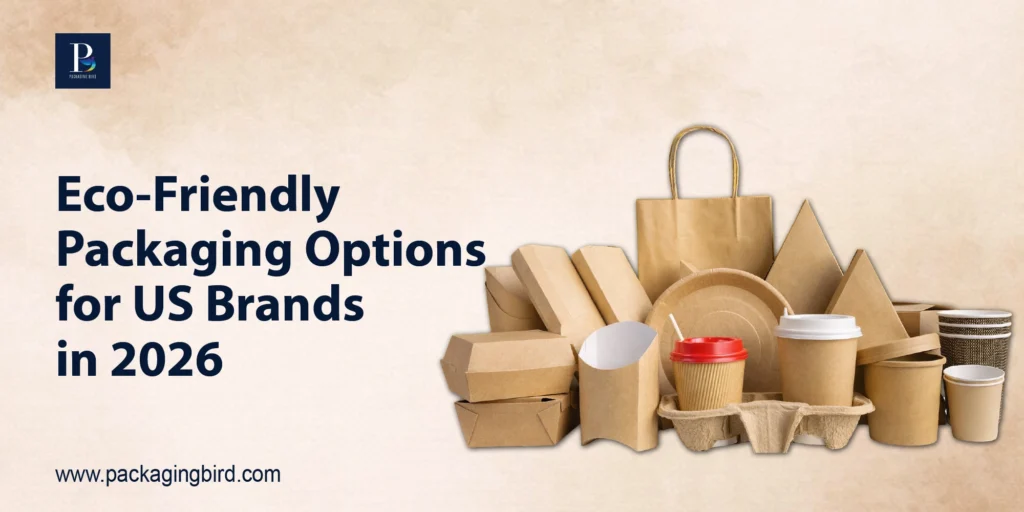
One of the most popular types of recyclable packaging is still made of recyclable materials. Cardboard, paperboard, and certain plastics can be processed and reused, reducing the need for virgin materials.
Thanks to recent advancements, recyclable packaging is now stronger and more attractive, making it appropriate for high-end goods. Nowadays, brands may continue to seem upscale while being ecologically conscious.
2. Biodegradable and Compostable Packaging
Compostable packaging goes one step further by becoming nutrient-rich soil, whilst biodegradable packaging decomposes naturally over time. These choices are becoming more and more common among companies who want to cut down on waste going to landfills.
Innovative materials for compostable packaging include plant-based fibers, cornstarch, and packaging made of mushrooms. They are particularly helpful for e-commerce, food, and cosmetics companies.
3. Reusable Packaging Solutions
Reusable packaging is one of the most impactful forms of eco-friendly packaging. Instead of being discarded after a single use, these packages are designed to be used multiple times.
Examples include:
- Durable rigid boxes
- Fabric packaging bags
- Refillable containers
This approach not only reduces waste but also enhances brand value, as customers are more likely to keep and reuse well-designed packaging.
4. Minimalist Packaging Design
Less is sometimes more. The goal of minimalist packaging is to cut down on unnecessary materials without sacrificing functionality. This includes using fewer layers, smaller sizes, and simplified designs.
Brands may minimize their environmental effect, cut production costs, and reduce shipment weight by implementing simple compostable packaging.
5. Plant-Based and Alternative Materials
The future of sustainable packaging is being revolutionized by novel materials. The following are being used more frequently in 2026:
- Seaweed-based packaging
- Bamboo fiber packaging
- Sugarcane (bagasse) containers
Compared to conventional packaging choices, these materials are renewable, biodegradable, and frequently need less energy to make.
Key Trends Shaping Eco-Friendly Packaging in 2026
Smart and Sustainable Packaging
Sustainable packaging involves incorporating technology to increase traceability and efficiency. Customers can find out about recycling guidelines and the product’s environmental impact through QR codes and smart labels.
Customization with Sustainability
By providing custom-printed eco-friendly packaging using water-based inks and low-impact printing methods, brands are fusing customization with sustainability.
Circular Economy Models
Sustainable packaging strategies increasingly revolve around the idea of a circular economy. This entails constructing packaging that can be recycled, composted, or reused in order to create a closed-loop system that reduces waste.
Benefits of Switching to Sustainable Packaging
Adopting sustainable packaging offers multiple advantages beyond environmental impact:
- Stronger Brand Image: Customers trust and prefer sustainable brands
- Cost Savings: Reduced material usage and shipping costs
- Regulatory Compliance: Stay ahead of environmental laws
- Customer Loyalty: Build long-term relationships with eco-conscious consumers
In a competitive market, sustainability can be a powerful differentiator.
How to Transition to Compostable Packaging
Making the shift to compostable packaging doesn’t have to be overwhelming. Here are a few steps to get started:
- Audit Your Current Packaging
Identify materials that can be replaced with sustainable alternatives. - Choose the Right Materials
Select options that align with your product, budget, and brand values. - Work with Reliable Suppliers
Partner with manufacturers who specialize in eco-friendly packaging solutions. - Educate Your Customers
Clearly communicate how to recycle or reuse your packaging. - Start Small and Scale Up
Begin with one product line and gradually expand your efforts.
The Future of Eco-Friendly Packaging
Future developments in eco-friendly packaging will include new materials, technology, and laws. Companies who embrace sustainability now will be in a better position to lead in the future, and companies like Packaging Bird are assisting them in making this shift by offering creative, ethical packaging solutions.
Customers now want to know how sustainable a brand is rather than if it is sustainable at all. Your company can fulfill these demands while making a positive impact on the environment by investing in eco-friendly packaging and collaborating with progressive suppliers like Packaging Bird.
Frequently Asked Questions
- What is eco-friendly packaging?
Eco-friendly packaging refers to packaging solutions that have minimal environmental impact. This includes recyclable, biodegradable, compostable, or reusable materials. - Is sustainable packaging more expensive?
Initially, eco-friendly packaging can be slightly more expensive, but it often leads to long-term savings through reduced material use and improved brand loyalty. - Which industries benefit most from reusable packaging?
Industries like e-commerce, food, cosmetics, and retail benefit greatly from reusable packaging, as consumers in these sectors prioritize sustainability. - How can brands promote their eco-friendly packaging?
Brands can highlight their eco-friendly packaging through labeling, marketing campaigns, and clear communication about sustainability practices.