Every product we buy comes with some form of packaging. A box protects a product during shipping, keeps it clean on store shelves, and gives a brand an opportunity to make a strong first impression. But once the product reaches the customer, what happens to that packaging?
In many cases, it gets thrown away. As online shopping and product deliveries continue to grow, packaging waste has become a bigger concern for both businesses and consumers. This is where Sustainable Packaging Boxes can make a practical difference. By choosing better materials and smarter box designs, businesses can reduce unnecessary waste without giving up product protection or attractive presentation.
What Makes Packaging More Sustainable?
Sustainable packaging is not simply about putting a green label on a box. It is about making thoughtful choices throughout the packaging process. A more sustainable box may use recyclable, recycled, renewable, or responsibly sourced materials. It may also be designed to use less material, take up less space, or serve more than one purpose.
For businesses, the idea is simple: use packaging that does its job without creating unnecessary waste. Materials such as kraft paper, corrugated cardboard, and paperboard are commonly considered for sustainable packaging because they can provide strength and functionality while offering recycling options in many areas.
Why Does Packaging Waste Matter?
Packaging is useful, but excessive packaging can create problems. Think about receiving a small product inside a large box surrounded by layers of plastic, paper, and other protective materials. Most of those materials may only be useful for a few minutes before becoming waste.
This can happen when businesses:
- Use boxes much larger than their products
- Add unnecessary layers of packaging
- Depend heavily on single-use materials
- Use packaging components that are difficult to recycle
- Add excessive plastic fillers
- Do not consider what happens to packaging after delivery
A more thoughtful packaging strategy can help reduce some of this unnecessary material.
How Sustainable Packaging Boxes Help Reduce Waste
The biggest advantage of sustainable packaging is not one single feature. It comes from making better choices at different stages of the packaging lifecycle.
1. Less Unnecessary Material
A well-designed box can provide the protection a product needs without using excessive material. For example, if a product fits securely inside a properly sized box, there may be less need for additional fillers or oversized packaging. This can reduce the amount of material used for every order.
When a business ships thousands of products, even a small reduction in packaging material can add up over time.
2. Recyclable Materials Can Have a Second Life
Paper-based packaging can often be recycled through appropriate local recycling programs. Instead of becoming immediate waste, a used cardboard or paper box may become a source of material for another product. Recycling does not eliminate environmental impact, but it can help keep useful materials in circulation.
This is one reason many businesses consider recyclable cardboard and paper-based materials when developing packaging.
3. Reusable Boxes Can Stay Useful Longer
Not every box needs to be thrown away after one use. A strong, practical box can be reused for storage, organizing household items, returns, gifting, or another shipment. The longer packaging remains useful, the longer it can stay out of the waste stream.
Businesses can encourage this by creating packaging that is easy to open without completely damaging the box.
4. Smart Design Can Reduce Empty Space
Box size matters more than many businesses realize. An oversized box requires more material and usually needs more filling to stop the product from moving around during transportation. A properly sized box can reduce empty space and make the packaging process more efficient.
It can also make storage and shipping easier because products can be packed more efficiently.
5. Paper-Based Options Can Replace Some Unnecessary Plastic
Plastic has an important role in certain packaging applications, particularly where moisture resistance or specialized protection is required. However, it is not always necessary for every product. For suitable applications, paperboard, kraft, or corrugated packaging can provide an alternative to certain plastic packaging components.
The right choice depends on the product and its transportation requirements rather than simply choosing a material because it is marketed as sustainable.
Popular Materials Used for Sustainable Packaging
There is no single material that works for every product. Businesses should choose packaging based on protection, durability, design, cost, and end-of-life options.
Kraft Packaging
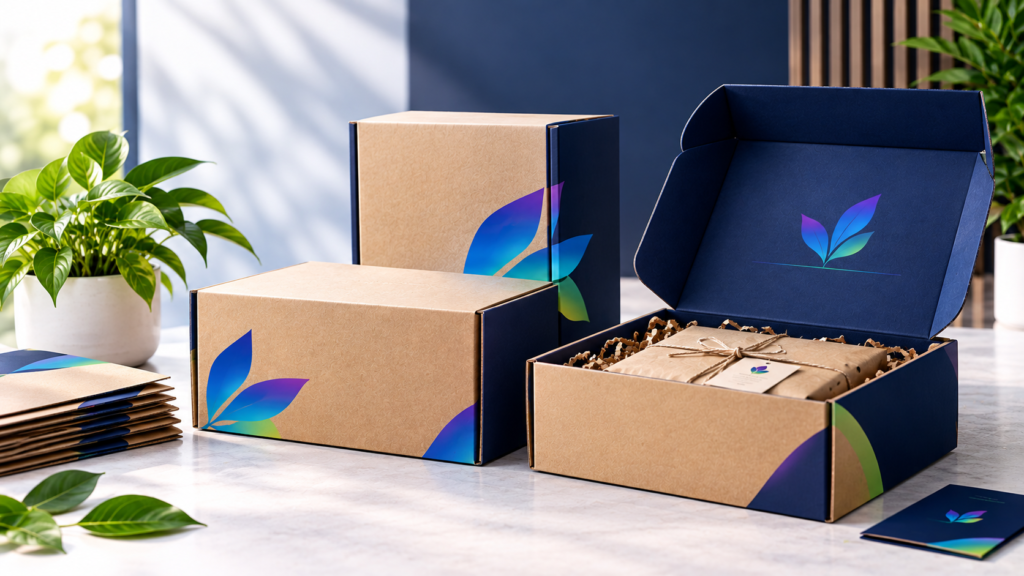
Kraft paper and kraft board are popular for their natural appearance and versatility. They can be used for retail packaging, food-related applications, subscription boxes, product packaging, and many other purposes. Their simple appearance also works well for brands that want a clean and minimal packaging style.
Corrugated Cardboard
Corrugated cardboard is widely used for shipping because it provides a useful combination of strength and relatively low weight. It can be customized into different box styles and sizes, making it suitable for many e-commerce and retail applications.
Recycled Paperboard
Recycled paperboard uses recovered paper fibers as part of its manufacturing process. It can be suitable for products that do not require the heavier protection offered by corrugated boxes. The specific environmental benefits depend on how the material is produced, used, collected, and recycled.
Sustainable Packaging Is More Than Choosing a Green Material
One common mistake is to think that changing the material automatically makes packaging sustainable. In reality, the entire design matters. Imagine two boxes made from the same recyclable material. One is appropriately sized, uses minimal additional material, protects the product effectively, and can be easily recycled. The other is unnecessarily large and contains several additional packaging components. The material may be similar, but the overall packaging approach is very different.
That is why businesses should consider material selection, box size, product protection, manufacturing, transportation, reuse, and disposal together.
How Businesses Can Reduce Packaging Waste
Businesses do not have to completely redesign their packaging overnight. Small improvements can make their packaging process more efficient.
Here are some practical steps to consider:
- Measure products before selecting box sizes
- Avoid oversized packaging where possible
- Choose recyclable or recycled materials when appropriate
- Reduce unnecessary inserts and fillers
- Review the amount of packaging used per order
- Consider whether boxes can be reused
- Select packaging that protects products without excessive material
- Provide customers with clear recycling or disposal information
- Work with packaging suppliers to explore more efficient designs
The best solution will vary depending on the type of product and how it reaches the customer.
Why Sustainable Packaging Matters for E-Commerce Brands
For online businesses, packaging has an especially important role. A product may travel through warehouses, delivery vehicles, sorting facilities, and several handling points before reaching the customer’s doorstep. The packaging needs to protect the product throughout that journey.
At the same time, customers are increasingly aware of the amount of waste created by online orders. Using Sustainable Packaging Boxes can help e-commerce brands find a balance between protection, presentation, and responsible material use. A well-designed box can also create a better unboxing experience without relying on unnecessary layers of packaging.
Sustainable Packaging Can Strengthen Your Brand
Packaging is often the first physical interaction a customer has with an online brand. A thoughtfully designed box can communicate attention to detail before the customer even sees the product.
Simple kraft packaging, recyclable cardboard boxes, minimal printing, and practical designs can create a clean and professional appearance. More importantly, they can show customers that the business has considered what happens after the package is opened.
Sustainability should not be treated only as a marketing message. When it is supported by practical packaging decisions, it becomes part of the overall customer experience.
How Packaging Bird Can Help With Sustainable Packaging
At Packaging Bird, businesses can explore packaging solutions designed around their products, branding, and packaging requirements.
Every product is different, so the ideal box should be selected according to its size, weight, fragility, shipping conditions, and presentation needs. A customized approach can help avoid unnecessary packaging while ensuring the product remains properly protected.
From kraft-style packaging to custom cardboard solutions, the right packaging design can help businesses create a balance between functionality, appearance, and more responsible material choices.
Frequently Asked Questions
Are Sustainable Packaging Boxes recyclable?
Many sustainable boxes are made from recyclable paper-based materials such as cardboard and kraft board. However, recyclability depends on the material, coatings, adhesives, printing, contamination, and local recycling facilities.
Can sustainable packaging protect products during shipping?
Yes. Sustainable packaging can provide effective product protection when the box is properly designed for the product’s size, weight, and shipping conditions. Corrugated cardboard, for example, is widely used for transportation and e-commerce packaging.
Are sustainable boxes more expensive?
The cost depends on the material, size, printing, quantity, and customization. While some sustainable options may have a higher initial cost, efficient box sizing and reduced material use can help businesses manage overall packaging expenses.
Can sustainable packaging be customized?
Yes. Sustainable boxes can be customized in different sizes, shapes, finishes, and printing options. Businesses can create packaging that reflects their brand while still considering material efficiency and recyclability.
How can a business start reducing packaging waste?
Start by reviewing the current packaging process. Identify oversized boxes, unnecessary fillers, excessive layers, and materials that are difficult to recycle. Replacing these with appropriately sized and more practical packaging can be a good starting point.
Final Thoughts
Reducing packaging waste does not necessarily mean compromising product protection or brand presentation. It starts with making smarter decisions about how much packaging is actually needed and which materials make sense for the product. Sustainable Packaging Boxes can help businesses reduce unnecessary material use, support recycling and reuse, and create a more thoughtful experience for customers.
The most effective approach is to look beyond the box itself. Consider the entire journey of the packaging from production and transportation to the moment the customer opens it and decides what to do with it afterward.
For businesses that want packaging to be practical, attractive, and more responsible, thoughtful sustainable packaging is a step in the right direction.