Packaging is more than just a way to deliver clothing from one place to another. It protects products, keeps orders organized, and gives customers their first physical impression of a brand. For clothing retailers, fashion labels, and online stores, choosing the right packaging can make a real difference in daily operations and customer satisfaction.
However, not every business needs the same type of packaging. Some brands want boxes that reflect their identity through custom printing, colors, and unique designs. Others prefer simple, ready-made boxes that keep packaging costs manageable and make order fulfillment easier.
This is where the choice between custom and standard Wholesale Apparel Packaging Boxes becomes important. Both options have advantages, but the right solution depends on your products, budget, order volume, and business goals.
Custom and Standard Apparel Packaging
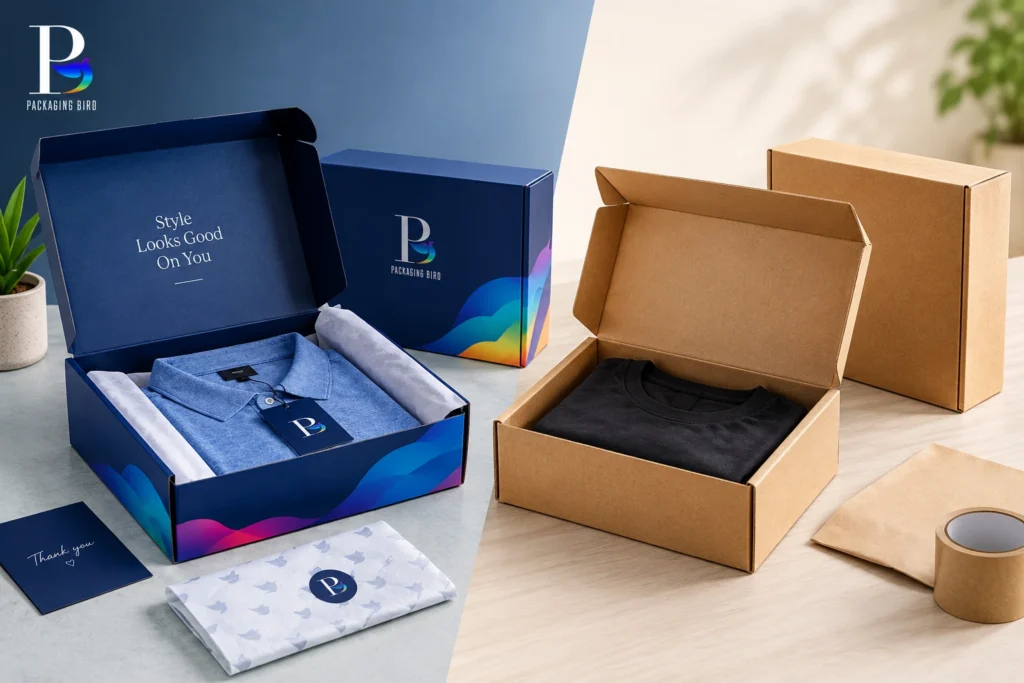
Before deciding which option is better, it helps to understand how these two packaging solutions differ. Custom apparel packaging is designed around a business’s specific requirements. Brands can choose box dimensions, materials, printing, colors, and finishing details to create packaging that suits their products and visual identity. This option is particularly useful for businesses that want a consistent and recognizable presentation.
Standard apparel packaging uses pre-manufactured box sizes and designs. These boxes are generally simpler and may be available more quickly when the required stock is on hand. They are a practical choice for businesses that need dependable packaging without investing in a fully customized design. Neither option is right for every situation. A small clothing store shipping basic garments may have very different needs from a fashion brand delivering premium products to customers across the country.
What Makes Custom Apparel Packaging a Good Choice?
Custom packaging gives clothing businesses greater control over how their products are presented. Instead of choosing from a limited selection of existing boxes, businesses can develop packaging that fits their products and supports their brand image.
1. Create a Consistent Brand Identity
Imagine receiving two clothing orders. One arrives in a plain box, while the other comes in packaging with carefully chosen colors, a recognizable logo, and a neat presentation. Both may contain the same quality of clothing, but the second package can create a more memorable first impression. Custom boxes give businesses the opportunity to present their brand consistently. Logo placement, brand colors, printed messages, and other design elements help customers recognize the business behind their purchase.
For fashion brands competing in a crowded market, these details can help create a more professional appearance.
2. Choose Packaging That Fits Your Products
Clothing comes in many shapes and sizes. A folded T-shirt does not need the same packaging as a thick hoodie, a formal dress, or a collection of several garments. With custom packaging, businesses can choose dimensions that suit their products. A well-fitted box helps keep garments in place and reduces unnecessary empty space.
Choosing an appropriate size can also make packing easier for employees and help businesses avoid using excessive filler materials. The final design should still leave enough room for tissue paper, protective wrapping, or other items when required.
3. Improve the Unboxing Experience
For online clothing stores, packaging is often the first physical interaction customers have with the brand. Since shoppers cannot handle the product before placing an order, the way it arrives becomes part of their overall experience. Custom apparel boxes can include neat interiors, printed messages, branded tissue paper, or convenient opening features. These small touches can make an order feel more carefully prepared.
Premium packaging does not automatically guarantee customer loyalty, but thoughtful presentation can support a positive experience and reinforce the quality a brand wants to communicate.
4. Support Special Collections and Promotions
Custom packaging is useful when a business launches a new collection, prepares seasonal offers, or creates gift-ready clothing packages.
For example, a fashion retailer might introduce special packaging for a holiday collection or use a different design for a limited-edition product. These variations help distinguish particular orders without changing the clothing itself. Businesses can also use custom packaging for influencer deliveries, promotional campaigns, and branded gift sets.
What Should You Consider Before Choosing Custom Boxes?
Custom packaging usually requires more planning than standard boxes. Design approval, printing requirements, production schedules, and minimum order quantities can affect both cost and delivery time. There is also the question of storage. Ordering large quantities may lower the price per box, but businesses need enough space to keep unused packaging in good condition.
For this reason, custom boxes are generally most practical when a business has clear branding requirements and reasonably predictable packaging demand.
Why Do Businesses Choose Standard Apparel Packaging Boxes?
Custom designs are not always necessary. For many clothing businesses, simple packaging is enough to protect products and keep orders moving efficiently.
Standard boxes offer a straightforward solution for companies that want to avoid unnecessary design expenses or need packaging that can be reordered easily.
1. Keep Packaging Costs Under Control
Packaging expenses can add up quickly, particularly for businesses shipping hundreds or thousands of orders each month. Standard boxes can help control initial costs because they generally do not require custom design work or specialized printing setup. This makes them attractive to new clothing businesses, small retailers, and sellers operating on tight margins.
The actual savings depend on box dimensions, material, order quantity, and supplier pricing, so comparing complete quotes is still important.
2. Make Ordering Simpler
Standard packaging reduces the number of decisions involved in purchasing boxes. Instead of approving artwork and reviewing a custom sample, businesses can select an available size and material that meets their requirements. This simpler process can save time for retailers managing inventory, customer orders, and shipping at the same time. When a commonly used size is available in stock, replenishing packaging may also be easier.
3. Stay Flexible as Your Business Changes
New clothing businesses often experiment with different products, packaging methods, and sales channels. Their requirements may change as they learn which items sell best. Standard boxes can offer flexibility during this stage. A business can purchase suitable quantities of commonly available sizes without committing to a large batch of packaging printed with a particular design. This can be particularly useful when product lines change frequently or demand is difficult to predict.
4. Focus on Practical Protection
Not every package needs elaborate printing to look professional. A clean, appropriately sized box made from suitable material can protect garments and present them neatly. Businesses can also add simple finishing touches, such as a branded sticker, a thank-you card, or tissue paper. This approach keeps the packaging relatively simple while giving customers a more personal experience.
Are Standard Boxes Always the Better Budget Option?
Not necessarily. Standard boxes may have a lower starting cost, but the wrong size can lead to wasted space, additional filler materials, or higher shipping expenses. If a business uses several different standard sizes to accommodate its products, managing that inventory can also become complicated.
The goal should be to select boxes that fit the products properly and work efficiently within the business’s packing and shipping process.
Custom vs Standard Wholesale Apparel Packaging Boxes
The following comparison highlights the main differences between both options.
| Feature | Custom Packaging | Standard Packaging |
|---|---|---|
| Design | Tailored to your brand | Usually simple and predefined |
| Box dimensions | Can be made to specific requirements | Limited to available sizes |
| Initial investment | Often higher | Often lower |
| Branding | Extensive printing and finishing options | Usually limited, with optional add-ons |
| Availability | Requires production time | May be available immediately if in stock |
| Order planning | May require advance forecasting | Often easier to replenish |
| Storage | Large custom orders may need more space | Depends on the quantity and size stocked |
| Best suited for | Established brands and distinctive product presentation | Startups, everyday shipping, and budget-conscious businesses |
The main difference is the level of control each option provides. Custom packaging offers more freedom over design and dimensions, while standard packaging emphasizes convenience and simplicity.
Which Option Offers Better Value for Money?
The best packaging choice is not always the one with the lowest price per box. Businesses should consider the total cost of purchasing, storing, preparing, and shipping their orders.
Standard boxes are often a sensible starting point for companies that want to minimize upfront expenses. They can be particularly useful when order volumes are low or sales fluctuate throughout the year.
Custom boxes may offer better value when a business orders packaging regularly, has consistent product dimensions, and benefits from branded presentation. Larger quantities may reduce the unit cost, although the initial investment and storage requirements can be higher.
Before making a decision, compare:
- The price per box at different order quantities.
- Printing, design, and setup charges.
- Shipping and delivery costs.
- Minimum order requirements.
- Storage space and inventory turnover.
- Additional materials needed to pack each garment.
- The time required to receive replacement stock.
For example, a clothing store selling the same range of folded shirts every month may benefit from a custom box designed around its regular orders. A new online seller testing several product categories may be better off with standard boxes until demand becomes more predictable.
Looking at these costs together provides a clearer picture of which option makes financial sense for your business.
How Does Packaging Affect Customer Perception?
Customers pay attention to more than the product inside a package. The condition of the box, the way the garments are arranged, and the ease of opening the parcel all contribute to the experience. Custom packaging can help a brand communicate its personality. Minimal designs may suit modern fashion labels, while more detailed printing can support premium or gift-oriented collections.
Standard packaging can also create a positive impression when it is clean, sturdy, and appropriately sized. A plain box that arrives in good condition is often preferable to an elaborate package that is difficult to open or poorly suited to the product.
The most effective approach is to make packaging consistent with the quality of the clothing and the expectations of the target customer.
How to Choose the Right Apparel Packaging for Your Business
Choosing between custom and standard packaging becomes easier when you evaluate your actual requirements instead of following packaging trends.
Consider the Type of Clothing You Sell
Start by looking at the products you ship most frequently. Lightweight T-shirts, folded shirts, trousers, and thicker garments may require different box dimensions.
Measure your folded products and consider whether you need additional space for tissue paper, labels, or protective wrapping. If you sell several product categories, determine whether a few standard sizes will work or whether custom dimensions would simplify packing.
Think About Your Order Volume
How many packages does your business send each week or month? If you have regular demand, ordering custom boxes in bulk may be worth evaluating.
If order volumes change significantly, standard packaging can help you avoid holding large quantities of unused boxes. Seasonal businesses should also account for peak periods when planning packaging purchases.
Decide How Important Branding Is
If your business depends on a distinctive visual identity, custom packaging may be a worthwhile investment. It allows you to create a consistent appearance across packaging, labels, and other branded materials.
If branding is not a major priority, standard boxes with simple finishing touches may provide all the presentation your business needs.
Check Material Quality and Shipping Requirements
The appearance of a box matters, but its ability to protect the contents is equally important. Consider the weight of your garments, how packages will be transported, and whether they may be stacked during storage or delivery. Corrugated cardboard may be appropriate for many shipping applications, while paperboard can suit lighter products and retail presentation.
Choose a material based on the actual demands of the shipment rather than appearance alone.
Request Samples Before Ordering in Bulk
A sample helps you evaluate the box’s size, structure, finish, and ease of use before committing to a larger order. Pack your actual garments inside and check whether they fit comfortably. If possible, test how the package handles normal movement and shipping conditions. This simple step can help prevent avoidable problems and make it easier to compare different suppliers.
Can You Combine Custom and Standard Packaging?
Absolutely. Businesses do not have to use just one type of packaging for every order. A clothing retailer might use standard boxes for everyday deliveries and custom packaging for premium products, gift orders, or special collections. Another business may choose standard-sized boxes and add branded stickers, tissue paper, or printed tape.
This approach offers a useful balance between presentation and cost. It also allows businesses to introduce branding gradually instead of committing to fully customized packaging across their entire product range. For companies with changing sales volumes, a mixed strategy can provide greater flexibility while maintaining a consistent customer experience.
How Packaging Bird Can Help You Explore Apparel Packaging Options
Every apparel business has different packaging priorities. A startup may be looking for affordable boxes that are easy to store, while an established clothing brand may need packaging that supports a more recognizable identity.
Packaging Bird gives businesses a starting point for exploring packaging solutions that align with their products and requirements. When comparing available options, consider box dimensions, material choices, printing possibilities, order quantities, and production timelines.
If branded presentation is important, ask about customization options and the specifications needed to produce packaging for your clothing range. If convenience and cost are your main concerns, compare standard sizes and determine whether they can accommodate your most common orders.
Before placing a bulk order, confirm the supplier’s available options, pricing, minimum quantities, and lead times. This will help you make a decision based on your actual needs rather than assumptions about which type of box is best.
Conclsuion
Custom and standard packaging both serve an important purpose, but they suit different business needs. Custom packaging is a strong choice for clothing brands that want greater control over product presentation, box dimensions, and branding. It can support a consistent identity and create a more considered unboxing experience, provided the additional cost and planning are justified.
Standard packaging is often a practical choice for businesses that prioritize affordability, straightforward ordering, and flexibility. It can work particularly well for startups, small retailers, and companies with changing product ranges.
For some businesses, combining both options may be the most sensible approach. Before choosing, consider your budget, sales volume, product dimensions, and shipping requirements. The right Wholesale Apparel Packaging Boxes should protect your clothing, fit your workflow, and support the experience you want customers to have.
With careful planning and a suitable packaging supplier, Packaging Bird can be part of your process for finding packaging that meets your business needs without spending more than necessary.
Frequently Asked Questions
1. What is the difference between custom and standard apparel packaging boxes?
Custom boxes are designed around a business’s requirements, including dimensions, printing, colors, and finishes. Standard boxes come in predefined sizes and designs, making them a convenient option for businesses that need straightforward packaging.
2. Are wholesale apparel packaging boxes suitable for small businesses?
Yes. Buying boxes in bulk can help small clothing businesses maintain a reliable packaging supply. However, the ideal order quantity depends on available storage, sales volume, cash flow, and the supplier’s minimum order requirements.
3. Are custom apparel boxes more expensive?
Custom boxes often have higher initial costs because of design, printing, and production requirements. Their overall value depends on the order quantity, packaging specifications, and importance of branded presentation.
4. Which packaging is best for shipping clothes?
The best packaging depends on the garment’s size, weight, and shipping conditions. Suitable corrugated boxes are commonly used for shipping, while lightweight paperboard boxes may be appropriate for certain retail applications.
5. Can standard boxes be used for branded clothing?
Yes. Businesses can personalize standard boxes with stickers, labels, branded tape, tissue paper, or thank-you cards. These additions can create a recognizable presentation without requiring fully custom-printed packaging.
6. How can I reduce apparel packaging costs?
Compare supplier quotes, choose suitable box dimensions, avoid unnecessary packaging materials, and order quantities that match your expected demand. Consider storage and shipping expenses alongside the price per box.
7. What should I check before ordering packaging in bulk?
Review the box dimensions, material quality, printing requirements, unit cost, minimum order quantity, delivery schedule, and supplier policies. Testing a sample with your actual clothing products can help you avoid ordering unsuitable packaging.
8. Is custom packaging better for an online clothing store?
Custom packaging can help online stores build a consistent brand experience, particularly when presentation is an important part of their marketing strategy. However, standard boxes may be more practical for stores that are new or still testing their products and sales volumes.