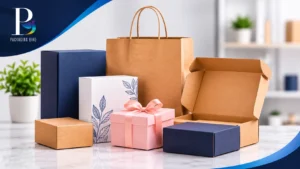
Imagine a customer ordering a product from your business for the first time. Before they see the actual item, they see the package it arrives in. The box may look simple, but it can influence how customers feel about the product and the brand behind it.
Some products need strong packaging to stay protected during shipping. Others require an attractive presentation that makes them stand out on a retail shelf. A jewelry brand, for example, may prefer a compact box with a premium finish, while an online clothing store might need lightweight packaging that is easy to store and ship.
This is why choosing the right Custom Box Styles deserves more attention than simply picking a box that fits your product.
Packaging comes in many shapes and structures, and each option serves a different purpose. Some boxes are designed for convenience, others focus on presentation, and some offer a combination of both. For businesses exploring better packaging options, Packaging Bird offers an opportunity to discover different box styles and find designs that suit their products. Let’s look at what makes each packaging style useful and how to decide which one makes sense for your business.
Not Every Product Needs the Same Type of Box
One of the biggest mistakes businesses make is assuming that one packaging style will work for everything they sell.
Think about a perfume bottle, a pair of shoes, and a box of chocolates. All three products have different shapes, handling requirements, and presentation needs. Putting them in the same type of packaging would not necessarily deliver the best result.
A perfume bottle may need a fitted insert to prevent movement. Shoes require enough space and a practical structure, while chocolates may need separate compartments to keep individual pieces organized.
Before choosing a box, consider three important questions:
- Does the product need additional protection during storage or delivery?
- Will customers see the packaging on a retail shelf or open it at home?
- Does the packaging need to communicate a particular brand image?
Answering these questions makes it easier to narrow down the available packaging options.
Exploring Custom Box Styles That Work for Different Products
Packaging structures are not just about appearance. Their opening mechanisms, materials, and construction determine how useful they are in everyday situations.
Here are some popular styles worth considering.
1. Two-Piece Boxes
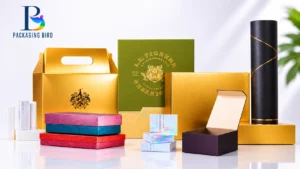
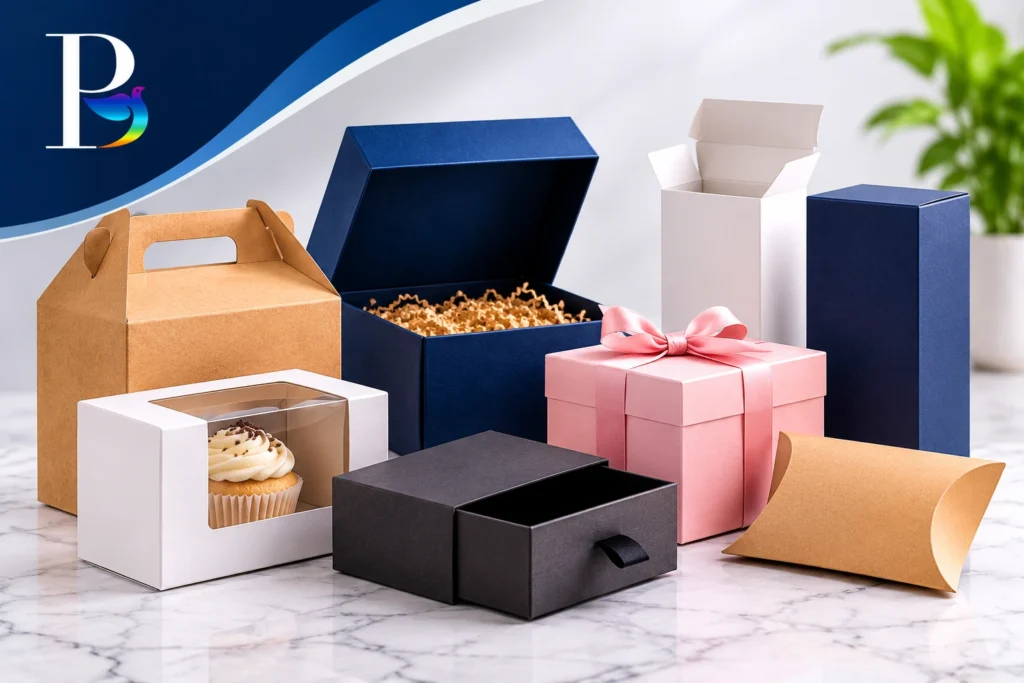
Two-piece boxes have a straightforward design consisting of a separate lid and base. The lid fits over the bottom section, creating a neat and structured appearance. This style is particularly useful for products where presentation matters. Jewelry, watches, gift items, and premium accessories are common examples.
Another advantage is the flexibility of the interior. Businesses can add foam inserts, cardboard dividers, or custom compartments to keep products in place. If your brand wants packaging that feels substantial and presents the product neatly, two-piece boxes are worth considering.
2. Magnetic Closure Boxes
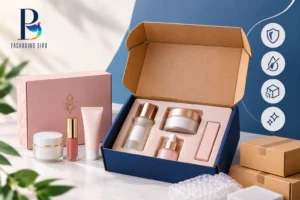
Some products deserve packaging that feels special when customers open it. Magnetic closure boxes are designed with this experience in mind. They typically feature a hinged lid with concealed magnets that keep the box closed. Instead of removing a separate lid, customers simply lift the cover to access the product.
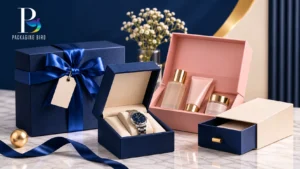
This design works well for perfume, skincare collections, electronics, corporate gifts, and premium promotional products. Brands can further customize these boxes through printed interiors, decorative finishes, ribbons, and product inserts. The main attraction is the combination of convenience and presentation.
3. Pillow Boxes
Pillow boxes have a distinctive curved shape that makes them easy to recognize. Their folded ends create a simple closure, while the overall structure gives the packaging a softer appearance. They are commonly used for jewelry, small accessories, party favors, promotional merchandise, and gift packaging.
Their compact design makes them suitable for products that do not require heavy-duty protection. Businesses can use printed graphics, brand colors, and decorative elements to make pillow boxes more attractive without relying on complicated packaging structures.
4. Gable Boxes
Have you ever received a small gift or takeaway item in a box with a built-in handle? That is often a gable box. Its integrated handle makes carrying easier, while the folded top gives it a recognizable shape. Gable boxes are frequently used for bakery products, party favors, promotional items, and small gift packages.
For businesses attending events, exhibitions, or promotional campaigns, this style can be a practical option. Customers can carry the package without needing an additional shopping bag in many situations.
5. Sleeve and Tray Boxes for a Different Opening Style
Sleeve and tray boxes use two separate components. An inner tray holds the product, while an outer sleeve slides around it. This design creates a simple but interesting opening experience. Customers pull the tray outward to reveal the product.
It is a suitable option for skincare products, small electronics, accessories, and specialty retail items. The outer sleeve also provides a useful surface for branding. Businesses can print product details, logos, and other visual elements without changing the basic structure of the inner tray.
6. Tuck End Boxes
Tuck end boxes are among the most practical options for businesses that package products regularly. They use folding flaps that tuck into the box to secure its contents. Depending on the construction, the top and bottom closures may tuck in the same or opposite directions.
You will often find this style used for cosmetics, personal care products, small retail merchandise, and lightweight consumer goods. One reason businesses choose tuck end boxes is their simple construction. They can be stored flat before assembly, which is useful when storage space is limited.
7. Drawer Boxes
Drawer boxes work much like a small storage drawer. The product sits inside an inner tray that slides out of an outer sleeve. This structure is especially useful for jewelry, watches, accessories, and gift products. It also gives businesses room to organize smaller items. For example, a jewelry brand can include a fitted insert to hold a necklace or ring securely.
Drawer boxes are a good option when you want packaging that is functional while still offering a carefully presented product.
8. Window Boxes to Let Customers See the Product
Sometimes customers want to see what they are buying before opening the package. Window boxes make this possible by including a transparent section in the packaging. The window can be positioned on the front, top, or another suitable panel.
This style is frequently used for bakery products, toys, cosmetics, and retail accessories. A visible product can help customers make purchasing decisions, especially in physical retail stores. However, the window should be designed carefully so it does not compromise the protection required by the product.
9. Display Boxes
Packaging does not always need to be placed on a shelf as an individual product box. Sometimes it needs to help present several products together. Display boxes are designed for this purpose.
They are commonly used on retail counters and promotional displays to keep products visible and accessible. Depending on the design, they may feature an open front, raised back panel, or compartments for individual items.
Businesses selling cosmetics, snacks, small accessories, and promotional products can benefit from this packaging style. A well-designed display box can also carry printed branding that makes the product arrangement look more professional.
10. Auto Bottom Boxes
When a business needs to prepare a large number of packages, assembly time becomes an important consideration.
Auto bottom boxes feature a pre-glued base that locks into position as the box is opened. This reduces the need to manually fold and secure the bottom flaps.
They are often used for cosmetics, food products, personal care items, and other retail packaging applications. For businesses handling regular packaging operations, this structure can make preparation more convenient.
How Do You Know Which Box Style Is Right for Your Business?
Looking at different packaging designs is a good starting point, but the final decision should come from your actual product requirements. A box that looks attractive in a photograph may not be practical for your business. It might be difficult to assemble, too large for the product, or unsuitable for the shipping process.
Here are a few things worth evaluating before making your choice.
Start With the Product, Not the Packaging Design
It is tempting to begin with colors, printing, and decorative finishes. However, the product should determine the basic packaging structure. Measure its length, width, and height. Consider its weight and whether it has fragile or unusually shaped components.
For products that can move around inside a box, consider using inserts or dividers. For lightweight items, a simpler structure may be sufficient. Getting these details right from the beginning can prevent problems during production and delivery.
Think About How Customers Will Receive the Product
A product sold in a physical store may need a different packaging style from one shipped directly to customers.
Retail packaging should be easy to display, identify, and handle. E-commerce packaging needs to consider transportation, handling, and the possibility of movement during delivery.
For example, a magnetic closure box may work beautifully for a premium gift, but it may need an additional shipping carton to protect it during transit. The packaging should be selected according to the complete customer journey, not just the moment the product is opened.
Decide How Much Branding You Actually Need
Not every business needs complicated packaging with multiple finishes and decorative elements. Sometimes a clean design with a well-positioned logo and consistent brand colors is enough.
Other businesses may benefit from specialty finishes, custom inserts, printed interiors, or unique structural designs. The important thing is to choose customization options that support your brand rather than adding features without a clear purpose.
Consider Storage and Assembly Requirements
Packaging also affects your daily operations. If you have limited storage space, flat-packed folding cartons may be more convenient than pre-assembled rigid boxes.
If your business prepares hundreds of packages every week, a box with a quick assembly mechanism may save time. These practical details are easy to overlook when comparing packaging designs, but they can make a noticeable difference over time.
Which Industries Benefit From Different Box Styles?
The ideal packaging structure often depends on the products being sold.
Here are a few examples of how different industries can approach packaging selection.
| Business type | Packaging styles worth considering |
|---|---|
| Cosmetics and skincare | Magnetic closure, tuck end, sleeve and tray |
| Jewelry and accessories | Drawer, two-piece, rigid boxes |
| Food and bakery | Window, gable, tuck end |
| Electronics | Two-piece, rigid, protective folding cartons |
| Clothing and fashion | Two-piece, mailer, folding cartons |
| Gift businesses | Pillow, magnetic closure, two-piece |
| Retail stores | Display, window, tuck end |
| Promotional businesses | Gable, pillow, display boxes |
These are starting points rather than strict recommendations. A business should always consider the product’s size, weight, protection requirements, and intended packaging experience.
Material Selection Can Change the Entire Packaging Experience
The structure of a box is only one part of the decision. The material also affects how the package looks, feels, and performs.
For example, two boxes with the same dimensions can create very different impressions when made from different materials.
Cardstock: A lightweight option commonly used for folding cartons and everyday retail packaging. It is suitable for many consumer products.
Kraft paperboard: Often selected for its natural, understated appearance. It can work well for brands looking for a simple paper-based packaging presentation.
Corrugated cardboard: Contains a fluted inner layer that provides cushioning and additional structural strength. It is frequently used for shipping and protective packaging.
Rigid board: A thicker material often used for premium gift packaging, jewelry boxes, and luxury product presentation.
When comparing materials, consider the product, printing requirements, shipping conditions, and overall packaging budget.
If sustainability is important to your brand, also review the material’s sourcing and recyclability. A paper-based package is not automatically recyclable in every location, particularly when it contains certain coatings, laminations, or mixed materials.
Packaging Decisions That Can Cost Businesses More Later
Sometimes packaging problems do not become obvious until production or delivery begins.
A box may look perfect on a computer screen but fail to fit the product correctly. Another design may be attractive but take too long to assemble.
To avoid these situations, keep a few common mistakes in mind:
- Choosing the wrong dimensions: Even a small measurement error can affect how a product fits inside its packaging.
- Ignoring product movement: Items that shift during transportation may need inserts or additional cushioning.
- Overcomplicating the design: Too many decorative elements can increase production costs without improving functionality.
- Forgetting about storage: Pre-assembled boxes may require more space than flat-packed alternatives.
- Skipping physical samples: A sample allows you to check the actual size, structure, opening mechanism, and print quality before ordering in larger quantities.
Taking time to review these details can make the packaging process much smoother.
Making a Better Packaging Choice With Packaging Bird
Choosing packaging is not about finding the most expensive or visually impressive box. It is about finding a structure that makes sense for your product and business.
A small accessory may need a compact pillow box, while a premium skincare collection may look better in a magnetic closure design. A retail product may require a simple tuck end box, whereas an item intended for countertop promotion could benefit from a display structure.
Packaging Bird gives businesses an opportunity to explore different box styles and compare packaging options for their products.
Before settling on a design, think about how the product will be stored, shipped, displayed, and received by customers. Compare the available structures, consider suitable materials, and review customization options.
The right packaging should serve a practical purpose while making your brand look consistent and professional.
Frequently Asked Questions
1. What are the most popular custom box styles?
Some popular options include two-piece boxes, magnetic closure boxes, pillow boxes, gable boxes, sleeve and tray boxes, tuck end boxes, drawer boxes, and window boxes. Each style serves different product and presentation requirements.
2. Which box style is best for luxury product packaging?
Magnetic closure, two-piece, and drawer boxes are popular for luxury products. They offer a more structured presentation and can accommodate custom inserts and decorative finishes.
3. What is the best packaging style for e-commerce businesses?
The best choice depends on the product and shipping requirements. Mailer boxes and suitably designed folding cartons are common options, while fragile products may need additional protective packaging.
4. Can I customize the size and design of packaging boxes?
Many packaging styles can be customized according to product dimensions, printing requirements, brand colors, and other design preferences. Available options depend on the selected structure and material.
5. Are folding cartons suitable for retail products?
Yes. Folding cartons are widely used for retail packaging because they are lightweight, versatile, and available in several structural designs. They can also be customized with product information and brand graphics.
6. How can I make my packaging more attractive?
Start with a clean design that reflects your brand identity. Use suitable colors, readable typography, professional printing, and a box structure that presents the product properly. Custom inserts and specialty finishes can also improve presentation.
7. What should I consider before ordering custom packaging?
Check your product dimensions, material requirements, packaging structure, printing preferences, order quantity, storage needs, and budget. Reviewing a physical sample before approving a larger production order is also helpful.
Final Thoughts
The best packaging choice is not always the one with the most complicated design. It is the one that fits the product, works well for your business operations, and gives customers a positive impression of your brand. From simple tuck end cartons to premium magnetic closure and two-piece boxes, different Custom Box Styles offer different ways to package and present products.
Take time to compare your options before making a decision. A little planning at the beginning can help you avoid packaging problems later and create a better experience for the people buying your products.
Explore the packaging options at Packaging Bird to find a box style that makes sense for your products and your brand.